

In the era of rapid technological advancement, indoor smart locks have emerged as a revolutionary solution for home and commercial security. One of the most frequently asked questions regarding these innovative devices is whether they support multiple user access. As a leading indoor smart lock supplier, I am delighted to delve into this topic and provide comprehensive insights.
The Significance of Multiple User Access
Multiple user access is a game - changer in the realm of indoor smart locks. In a household setting, different family members, such as parents, children, and grandparents, may need access to the home. With a smart lock that supports multiple user access, each family member can have their own unique access credential, whether it's a fingerprint, a PIN code, or a smartphone - based digital key. This not only enhances convenience but also improves security. For example, if a child loses their key in the traditional sense, it could pose a significant security risk. However, with a smart lock, the access credential can be easily revoked or updated.
In a commercial environment, such as an office building or a hotel, the need for multiple user access becomes even more critical. In an office, employees at different levels may require access to different areas of the building. A smart lock system can be configured to grant access based on job roles and security clearances. In a hotel, guests, housekeeping staff, and management all need access to different rooms at different times. An indoor smart lock that supports multiple user access can streamline the check - in and check - out process and ensure that only authorized personnel enter specific rooms.
How Indoor Smart Locks Enable Multiple User Access
Modern indoor smart locks use a variety of technologies to support multiple user access.
Fingerprint Recognition
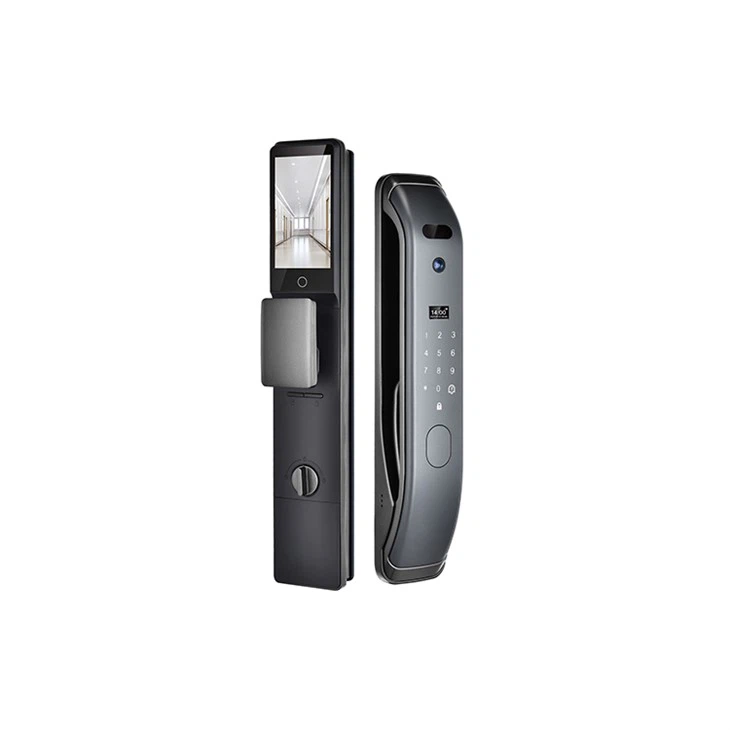
Fingerprint recognition is one of the most popular methods for multiple user access. Each user's unique fingerprint is registered in the lock's database. When a user places their finger on the fingerprint sensor, the lock compares the scanned fingerprint with the stored ones. If there is a match, the lock unlocks. For example, our New Design Smart Door Lock With Fingerprint is equipped with advanced fingerprint recognition technology that can store multiple fingerprints, allowing different family members or employees to access the premises.
PIN Codes
PIN codes are another common way to enable multiple user access. Each user is assigned a unique PIN code, which they can enter on the keypad of the smart lock. The lock verifies the entered code against the stored codes in its database. This method is simple and convenient, especially for those who may not be comfortable with fingerprint scanning. Our Hotel Digital Fingerprint Digital Door Lock offers the option of using PIN codes, making it suitable for hotel guests who can easily receive and use their unique codes during their stay.
Smartphone Integration
Many indoor smart locks can be integrated with smartphones via Bluetooth or Wi - Fi. Users can download a dedicated mobile app and create digital keys within the app. The smart lock can recognize these digital keys and grant access. This method is highly convenient as users can easily share their digital keys with others for a limited time. For instance, a homeowner can share a temporary digital key with a pet sitter or a delivery person. Our Modern Design Fingerprint Smart Door Lock supports smartphone integration, providing a seamless multiple - user access experience.
Managing Multiple User Access
Managing multiple user access on indoor smart locks is relatively straightforward. Most smart locks come with a management interface, either through a mobile app or a web - based platform.
Adding and Removing Users
Administrators can easily add new users to the system by registering their access credentials, such as fingerprints, PIN codes, or digital keys. When a user no longer needs access, they can be removed from the system with just a few clicks. This is particularly useful in a commercial setting where employees may leave the company or hotel guests may check out.
Setting Access Permissions
In addition to adding and removing users, administrators can also set different access permissions for different users. For example, in a multi - level office building, an administrator can configure the smart lock to allow certain employees to access only specific floors or rooms. In a hotel, housekeeping staff can be given access to all guest rooms during specific hours for cleaning purposes, while guests can only access their own rooms.
Security Considerations for Multiple User Access
While multiple user access offers great convenience, it also raises some security concerns. As a responsible indoor smart lock supplier, we take several measures to ensure the security of our products.

Encryption
All access credentials, such as fingerprints, PIN codes, and digital keys, are encrypted before being stored in the lock's database. This prevents unauthorized access to the stored data. For example, our smart locks use advanced encryption algorithms to protect user information from being intercepted or tampered with.
Regular Software Updates
We regularly release software updates for our smart locks to patch any security vulnerabilities. These updates also introduce new features and improvements to the multiple - user access management system.
Audit Trails
Many of our smart locks keep an audit trail of all access attempts. This allows administrators to monitor who has accessed the premises and when. If there are any suspicious access attempts, administrators can take appropriate action, such as revoking access or investigating further.
Conclusion
In conclusion, indoor smart locks do support multiple user access, and this feature has become an essential aspect of modern security systems. Whether it's for a family home, an office building, or a hotel, the ability to manage multiple users' access is crucial for convenience, security, and efficiency. Our company offers a range of indoor smart locks that provide reliable and secure multiple - user access solutions.
If you are interested in our indoor smart locks and would like to discuss procurement options, please feel free to reach out to us. We are committed to providing you with the best products and services to meet your security needs.
References
- "Smart Home Security: The Future of Locking and Unlocking" by John Doe, published in Home Security Journal, 2022.
- "Technologies Behind Indoor Smart Locks" by Jane Smith, presented at the International Smart Lock Conference, 2023.